

11 Sep When Do Animals Give Birth in the African Bush?
Nambiti’s Season of New Life
Most antelope, zebra and wildebeest on Nambiti Private Game Reserve give birth in the weeks around the first summer rains (roughly October to December in KwaZulu-Natal), when fresh grass, browse and water are at their most abundant. Timing births to this seasonal flush gives mothers more milk and newborns more food and cover, which is why the arrival of the rains at Nambiti also marks the arrival of the bush’s most vulnerable – and most remarkable – new residents.
This “birthing season” isn’t fixed on a calendar. It shifts with the rains themselves and varies by species, but the underlying reason is consistent across the reserve: survival is highest when young are born into abundance rather than scarcity.
Why does the timing of a birth matter so much in the bush?
For a newborn antelope, the first few weeks of life are the most dangerous it will ever face. Getting the timing right can be the difference between a young animal surviving its first season and not.
When the summer rains break over Nambiti, the transformation is immediate: dry, brown veld turns green, waterholes and pans refill, and new grass and leaves become available almost overnight. For herbivores, that abundance means two things at once – mothers produce more milk, and young animals get access to nutritious, easy-to-digest vegetation just as they start to graze and browse for themselves. It’s this narrow window of plenty that many of Nambiti’s species have evolved to give birth into.

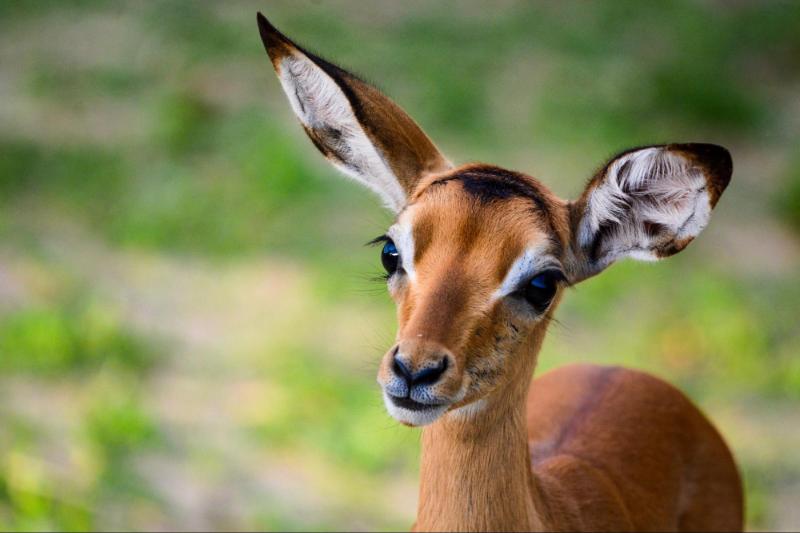
When do impala give birth, and why do they all arrive at once?
Impala lambing is one of the most tightly timed births in the bush. Rather than spreading births out over months, impala ewes on Nambiti tend to give birth within a short, synchronised window at the start of the rains, so that most lambs in a herd arrive within roughly the same few weeks.
This synchrony is a deliberate survival strategy known as the predator swamping effect: when a large number of vulnerable young appear at once, predators simply cannot catch them all, and each individual lamb’s odds of survival go up. Combined with the nutritional boost of fresh grass for nursing ewes, this makes impala lambing season one of the most concentrated bursts of new life anywhere on the reserve – and one of the best times for guests to see very young antelope on safari.
Do zebra and wildebeest also have a calving season?
Yes. Zebra foals and wildebeest calves follow the same broad pattern as impala – most are born in the weeks after the rains arrive, when mares and cows have the richest grazing available to support lactation.
A newborn foal or calf needs to stand and start moving with the herd within hours of birth, so a mother’s access to high-quality grass directly affects how strong and mobile her young can be, right from day one. Watching a zebra or wildebeest herd during this period often reveals foals and calves taking their first wobbly steps, learning to nurse, and beginning to pick up the herd behaviours – following, alert-calling, staying close to mom – that keep them alive.
Why does rainfall matter beyond just growing grass?
Rain does more than green the bush. As pans and waterholes fill across Nambiti, animals spend less time and energy travelling to find water and more time feeding and resting. Insect populations boom, plants respond right through the food chain, and the extra energy ripples outward – from the smallest insectivores to the largest grazers, and on to the predators that depend on them.
This is why the rains function as a trigger for the entire reserve’s breeding calendar, not just for one or two species.


Is there one single “birthing season” for every species at Nambiti?
No – and this is one of the more fascinating aspects of the bush’s rhythm. While many antelope, zebra and wildebeest cluster their births around the rains, other species reproduce year-round or on their own cycle, shaped by gestation length, food availability, predation risk and local conditions. Timing can also shift from one year to the next depending on when – and how much – the rains actually fall.
That variability is part of why every visit to Nambiti during the warmer, wetter months can reveal something different: no two birthing seasons play out exactly the same way.
What is the best time to visit Nambiti to see baby animals?
The best time to see newborn animals on safari at Nambiti is during the green season, from roughly October through to the early months of the new year, when the summer rains bring the reserve to life. Visitors during this period can expect a good chance of seeing wobbly-legged impala lambs, zebra foals staying close to their mothers, young elephants learning from the herd, and birds raising their chicks – all set against a landscape at its greenest and most productive.
It’s also an excellent time to combine wildlife sightings with the dramatic afternoon storms and clear, green vistas that define a South African green-season safari.
What happens to newborn animals after birth?
Birth is only the beginning. A newborn’s first weeks are filled with real risk: predators need to eat, and young herbivores must learn – fast – how to recognise danger and stay close to their mothers and the herd.
Maternal behaviour is critical to this process. Mothers hide newborns in cover, defend them, call to them, and guide them on where and when to feed. For predators, the arrival of vulnerable young prey is simply part of the same cycle – not a matter of “good” or “bad,” but nature maintaining its balance between predator and prey populations across the reserve.
A season worth watching
The arrival of new life is a reminder that the bush is always changing. A safari during the warmer, wetter months can turn up tiny signs of new life everywhere: a wobbly antelope lamb testing its legs, a zebra foal shadowing its mother, young elephants learning from the herd, birds raising their chicks in the undergrowth.
At Nambiti Private Game Reserve in KwaZulu-Natal, every season brings its own opportunities to witness these rhythms up close. The arrival of new life remains one of the most rewarding – and humbling – reminders that Nambiti is not simply a place to see wildlife, but a living ecosystem where every species plays its part.
From the first rains to the first tentative steps, the bush begins again.
Frequently asked questions
When is calving and lambing season in South Africa’s game reserves?
Most antelope, zebra and wildebeest time their births to the start of the summer rains, generally from October to December, though exact timing shifts with rainfall each year.
Why do impala give birth around the same time?
Impala ewes synchronise lambing to produce a “predator swamping” effect – so many lambs arrive within a short window that predators cannot catch them all, improving each lamb’s chance of survival.
What is the predator swamping effect?
It’s a reproductive strategy in which prey species give birth to large numbers of young within a short, synchronised period, overwhelming predators’ capacity to hunt them and increasing the survival odds of the group as a whole.
Do all African animals give birth at the same time of year?
No. While many herbivores cluster births around the rains, other species breed year-round or follow their own cycles shaped by gestation length, food availability and predation risk.
What is the best time to go on safari to see newborn animals?
The green season – roughly October to early the following year – offers the best chance to see newborn impala, zebra foals, young elephants and nesting birds at Nambiti Private Game Reserve in KwaZulu-Natal.