

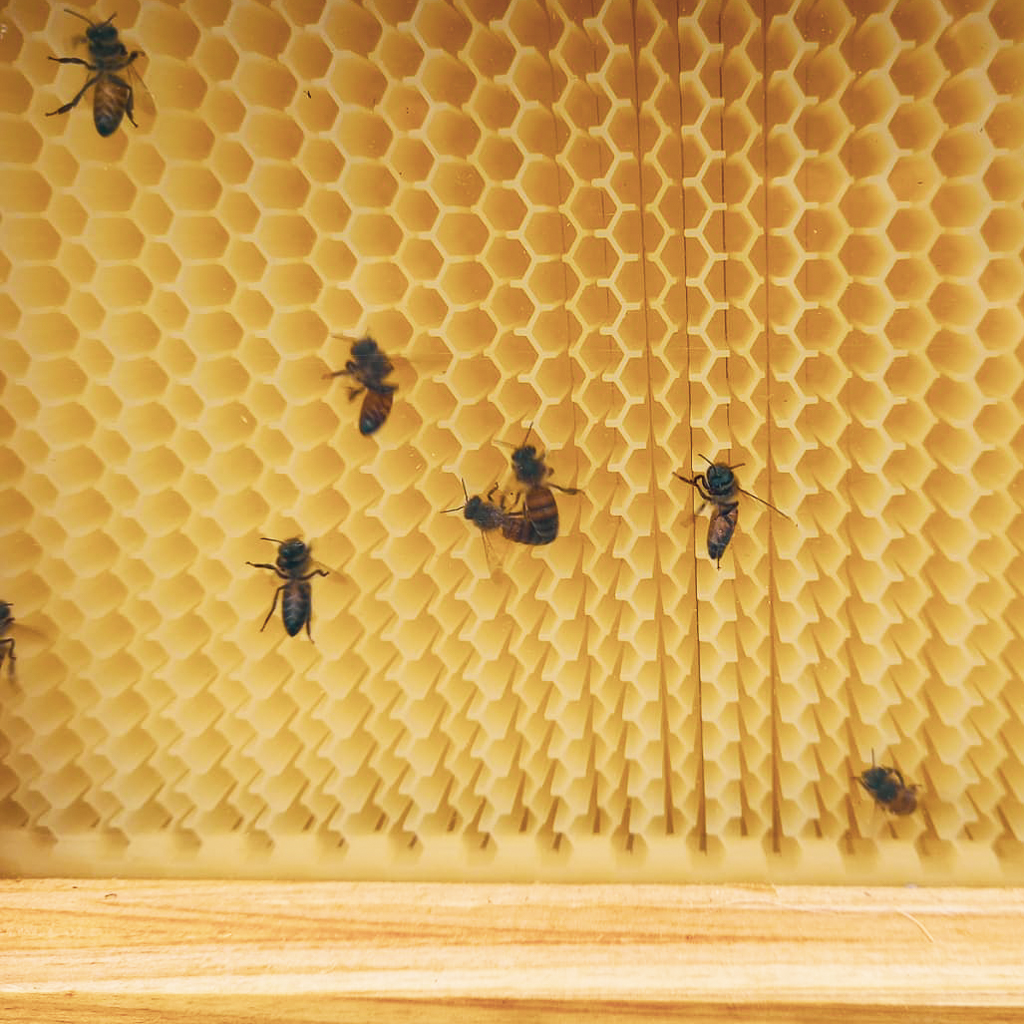

12 Nov How Nambiti is looking out for the honeybee
Nambiti is located in what is considered to be a bee belt, meaning the area is prone to bee populations inhabiting buildings that provide the structure they want for their hives. Bee populations across the world are facing a huge threat as their numbers are drastically dropping.
People worldwide are looking for ways to encourage the population growth of bees and protect colonies. Seeing as bees can be problematic when it comes to living in areas populated by humans, Nambiti decided the most eco-friendly way to protect both the bees and people is to have someone remove the swarms and invest in a beehive.
Beehives are a simple, yet innovative structure, that has been around for thousands of years.
While beekeeping began using pottery vessels 9,000 years ago, modern beehives were created in the 1850s. A beehive is a craftable structure that uses bees to accumulate honey that can be harvested. Since then, the basic design of a beehive has remained mostly the same.
Beehives have been around for centuries in different shapes, designs and sizes. The beehive creates an artificial hive in which the bees will live and produce honey.
You know that honey is collected from beehives, but how do beehives work exactly? Beehives are actually very simple. Beehives work in a very similar way to how bees would build their nest in nature.
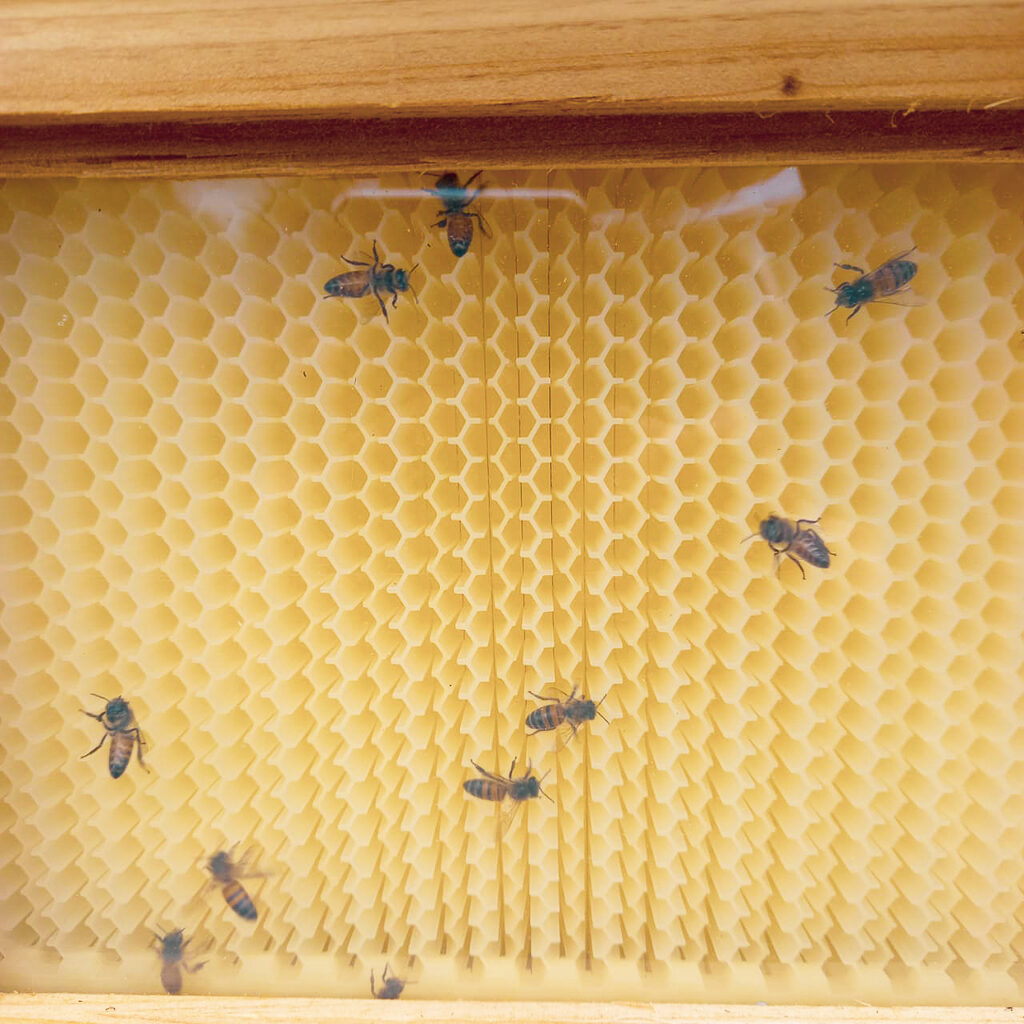

The boxes are meant to keep the honeybee colony safe and protected. The frames or bars of the hive are for the bees to build comb upon. In the lower portion of the hive, the queen will lay eggs. The brood (eggs, larva, and pupa) will hatch into drones (male bees) or workers (female bees). Worker bees have many different jobs within the colony. Some tend to the queen and brood, some produce wax and build comb, and some forage for pollen and nectar.
Honeybees convert nectar into honey by breaking it down in their stomachs and then drying it out to remove moisture. The honey is sealed and stored in hexagonal honeycomb cells to be eaten (or harvested by a beekeeper) later.
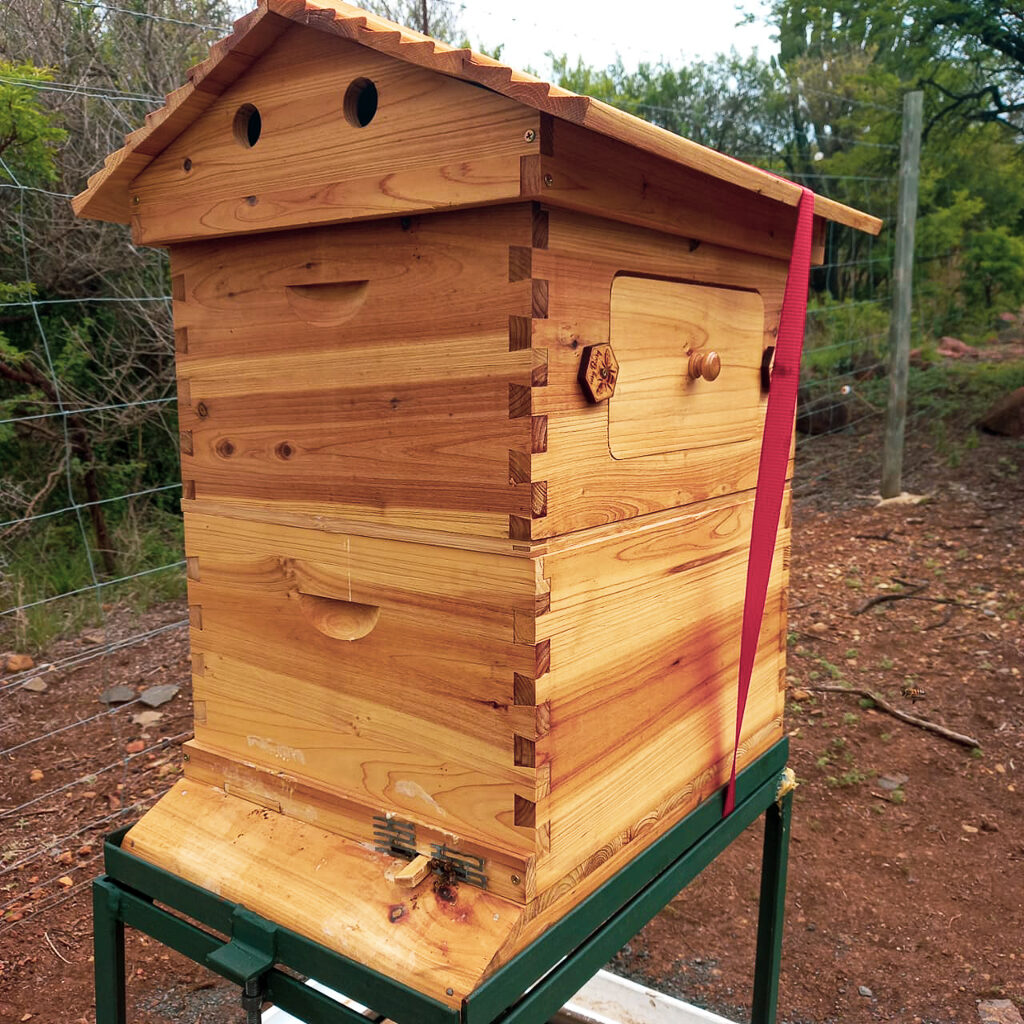
The beehive Nambiti has invested in is a hive that creates minimal disturbance to the bees. It has an auto-flow mechanism to prevent disturbing the bees when honey is harvested and causes no destruction to the bee colony. The Reserve has started with one box, but as things increase, would like to invest in more to help the bee population on Nambiti as much as possible to thrive and grow.
In parts of Africa, experiments seem to suggest that beehive nests put on fences around farms prevent elephant herds from invading the fields and eating up the crop.
Come and visit a top game reserve in KwaZulu-Natal where you will find Big 5 wildlife, over 200 bird species and a massive variety of flora. If you want a game reserve experience that you will never forget; visit one of our 9 Game Lodges which offer everything from safari camp to 5-star accommodation, catering and game drives. At Nambiti Private Game Reserve, we pride ourselves on taking care of the flora and fauna in our reserve and providing a memorable safari experience that you will not easily forget. Make your booking at nambiti.com/contact-us/.